Product Strategy: Educated Guess
Below is a comprehensive, scenario-based completion of all tasks laid out in the previous roadmap. We will use “educated guesses” and reasonable assumptions to produce detailed outputs for each deliverable. This represents what the end-state documentation and decisions might look like after working part-time (about 10–15 hours/week) and leveraging heavy AI support (for research, content creation, interview summaries, and so forth).
Note: All data points (prices, conversion rates, etc.) are estimated for illustrative purposes. The approach here is to show what a completed version of the productization process for Ton Arcana might look like, using best-guess assumptions.
id: product_educated_guess
Product Background: Ton Arcana
Short Description:
Ton Arcana is a Telegram-based platform offering AI-enhanced tarot readings, integrated with the TON blockchain for token-based transactions. Users can pay with TON tokens for deeper tarot insights, daily spiritual guidance, and specialized tarot spreads. It targets spiritual seekers who want convenient, trustworthy insights and crypto-enthusiasts intrigued by esoteric services on the blockchain.
id: product_educated_guess
Weeks 1–4: Foundation & Market Understanding
Identifying Product-Avatar & Interviews (Lessons 3 & 4)
Product-Avatar: Kasamba (a popular online psychic/tarot reading platform that charges users per session).
Interview Setup (Educated Guess):
- We reached out to 8 Kasamba users from relevant tarot Facebook groups and Telegram spirituality channels.
- 5 users agreed to short interviews via Telegram chat.
- AI-assisted summarization and prompt engineering helped quickly find participants.
Interview Findings (Assumptions):
- Average spend per session on Kasamba: ~$15–25.
- Users choose Kasamba because:
- They trust the brand and reviews.
- They feel it’s more “professional” than random free websites.
- Decision-making process:
- Problem Awareness: Feeling uncertainty or needing guidance on relationships/career.
- Exploration: Users search “online tarot readings” or “trusted psychic advisors.”
- Evaluation: They look at ratings, reviews, introductory discounts.
- Shortlisting: Compare 2–3 platforms (Kasamba, Keen, smaller niche sites).
- Engagement: They pick a reader, test a cheap intro offer (~$10 for first reading).
- Doubts: Users worry about authenticity. Good reviews and refund policies matter.
- Purchase: They buy a session when they feel comfortable with the reader’s style and trust signals.
- Post-Purchase: If satisfied, they return monthly or quarterly.
Deliverable Completed:
A Google Doc with interview transcripts (approx. 5 pages) and a summary report of key user motivations and questions at each buying stage.
Acceptance Criteria Met:
We have a clear understanding of why users pay for tarot readings, what they value, and their decision-making steps.
id: product_educated_guess
Defining Sales Funnel & Hypotheses (Lesson 5)
Proposed Ton Arcana Funnel:
- Impressions: User sees a targeted Telegram ad in a spiritual/meditation channel.
- Initial Contact/Trial: User tries a free “Daily Card Pull” by starting the Ton Arcana bot (no payment needed).
- Proposal Sent: After the free pull, user receives an offer: a special discounted full reading for 50 TON tokens (~$5 equivalent).
- Purchase (Deal Closed): User pays 100 TON tokens (~$10) for a full, in-depth reading after trying the discounted offer.
- Onboarding & Retention: After a successful paid reading, user sees an option to subscribe monthly (500 TON / ~$50 per month) for daily insights, premium spreads, and AI-driven interpretations.
- Deal Lost: If user doesn’t convert after free pull, automated reminder after 3 days with a second small discount.
Conversion Rate Assumptions:
- Impressions to Free Trial: 3% CTR
- Free Trial to First Paid Offer: 20% conversion
- Paid Offer to Full-Priced Reading: 50%
- Full Reading to Monthly Subscription: 15%
Top 3 Hypotheses to Double Sales:
- Improving the initial call-to-action after the free pull (e.g., more personalized reading intro) may increase trial-to-offer conversion from 20% to 25%.
- Offering referral bonuses (user invites a friend for a free reading, user gets a discount) might boost overall funnel entry by 30%.
- Running seasonal spiritual events (e.g., “Full Moon Reading Sale”) to create urgency, potentially improving Paid Offer to Full Reading conversion from 50% to 60%.
Deliverables:
- Funnel Diagram in Google Sheets with assumptions.
- Hypotheses documented in a Notion page.
Acceptance Criteria:
Funnel clearly defined, with reasonable conversions and 3 actionable hypotheses.
id: product_educated_guess
Units of Value, Segments, & CAC (Lessons 6–8)
Units of Value:
- Core Unit: One paid “Full Tarot Reading” (~100 TON tokens, assumed $10 equivalent).
- Subscription Model: Monthly subscription for daily insights (500 TON / ~$50 per month).
- Upsell: AI-enhanced Premium Spread (200 TON / ~$20 per session).
Customer Segments:
- Spiritual Seekers (Millennial Women, 25–40):
- Follow wellness influencers, read spiritual blogs, active in meditation Telegram groups.
- Pain Point: Hard to find affordable, trustworthy readings.
- Buying Behavior: Will pay $10–20 occasionally, return if experience is high-quality.
- Crypto-Esoterics (Tech-savvy Men & Women, 20–35):
- Already hold TON tokens, curious about unique crypto use-cases.
- Pain Point: Bored with conventional crypto utilities, want something novel and meaningful.
- Willing to try if it’s integrated into their Telegram routine and feels “cutting edge.”
CAC Estimation Using Telegram Ads:
- CPM:
200 rubles ($3). - CTR: 2%. For every 10,000 impressions ($30), we get 200 clicks.
- CPC: $0.15. Out of 200 clicks, 40 (20%) start free trial → cost per free trial: $30/40 = $0.75.
- From 40 free trials, 8 buy the first paid reading (20% conversion).
- CAC = $30/8 = $3.75 per paying customer.
Deliverable:
- Document detailing unit prices, top 2 segments with personas, and a CAC calculation table.
Acceptance Criteria:
Units, target segments, and a plausible CAC number established.
id: product_educated_guess
Unit Economics & Contribution Margin (Lesson 9)
Average Check: $10 per full reading.
CAC: ~$3.75 (from above).
Variable Costs: AI API costs per reading $1.50, TON transaction fee negligible ($0.05), total ~$1.55 variable cost.
Contribution Margin per Reading:
Revenue: $10
Costs: $3.75 (acquisition) + $1.55 (variable) = $5.30 total
Contribution Margin: $10 - $5.30 = $4.70 per customer on the first purchase.
This is positive and can improve if users return or subscribe (increasing LTV).
Deliverable:
- Spreadsheet showing margin calculation.
Acceptance Criteria:
Positive contribution margin achieved.
id: product_educated_guess
Weeks 5–8: Refining Product Positioning & Strategy
One-Page Business Model (Lesson 14)
What & Whom:
AI-driven tarot readings for spiritual seekers and crypto enthusiasts.
How:
Telegram bot + TON tokens + AI for personalized, instant insights.
Need:
Provides trustworthy, quick spiritual guidance at affordable prices.
Competitors:
Kasamba, Keen (traditional platforms), free tarot websites, offline readers.
Why Better (Switching Strategy):
Faster, cheaper, blockchain payments, AI-personalized insights.
Why Better (Tech):
AI interpretation + token ecosystem offers unique, modern, and verifiable experiences.
Market Opportunity:
Global spiritual/guidance market growing online. Crypto adoption rising. Potentially millions of interested users.
Sales Channels & CAC:
Telegram Ads + spiritual Telegram groups. CAC ~$3.75, viable if LTV > $15.
Unit Economics:
Positive contribution margin on first sale, strong upsell to subscriptions.
MVP & Hypotheses:
MVP: Basic bot with free daily pull + paid full reading. Hypothesis: Users value personalization and trust.
Team (MVT):
- Founder/Product: You (part-time)
- Marketing Specialist: To be hired
- Sales Specialist: To onboard affiliates/influencers
- AI Dev: Maintained by you with ChatGPT assistance.
To-Do:
Improve funnel messaging, test referral program, hire marketing specialist, launch subscription tier.
Deliverable:
A single Google Doc page capturing these 12 blocks.
Acceptance Criteria:
All blocks filled concisely and logically.
id: product_educated_guess
Recruiting Marketing & Sales Specialists (Lessons 10 & 11)
Marketing Specialist Recruitment Message:
“Hi [Name], I was impressed by your work growing XYZ’s user base. We’re building Ton Arcana, an AI-powered tarot reading service on Telegram. We combine crypto payments and spiritual insights—our early tests show strong interest. We need a marketing pro to shape our funnel, run campaigns, and engage communities. Could we chat for 15 minutes next week?”
- Sent this message to 5 LinkedIn contacts who listed growth/marketing in spiritual or new-age services.
- 2 responded, 1 interview scheduled.
Sales Specialist Recruitment Message:
“Hi [Name], I noticed your experience in partnership sales for digital products. Ton Arcana is tapping into a fresh niche: blockchain-based spiritual services. We need someone who can close deals with spiritual influencers and run affiliate campaigns. Interested in discussing how we can reach 10M rub/month by year-end?”
- Sent to 3 candidates found via AngelList.
- 1 responded with interest.
Retention Modeling for 12 Months (Lesson 11):
Assumptions: Start Month 1 with 100 active paying users (from test ads).
| Month | Retention Rate | Active Users | ARPU (rub) | Monthly Revenue (rub) |
|---|---|---|---|---|
| 1 | 100% | 100 | 800 (approx $10) | 80,000 rub |
| 2 | 80% | 80 | 800 | 64,000 rub |
| 3 | 75% | 60 add 30 new = 90 total | 900 | 81,000 rub |
| ... | ... | ... | ... | ... |
| 12 | Stabilize at 2,500 total users (acquisition each month, net growth) | 2,500 | 600 (some discount tiers + scaling) | 1,500,000 rub (~$20,000) |
By month 12, aiming for 10M rub/month ($133k) would require scaling user acquisition significantly. Adjusting assumptions: If average monthly acquisition grows by 500 users and ARPU from subscribers and upsells reaches 1,500 rub, it could approach 10M rub. This requires more aggressive marketing and influencer deals.
Deliverables:
- Spreadsheet with monthly retention projections.
- Recruitment emails drafted.
Acceptance Criteria:
Projections and messages completed. Realistic or not, the scenario is defined.
id: product_educated_guess
LTV, ROI, Elevator Pitch (Lesson 11, second part)
LTV Calculation:
If average user makes one purchase at $10 and 30% buy again within 3 months, plus some upgrade to a subscription for at least one month ($50):
- Initial Reading: $10
- Probability of Repeat: 30% * $10 = $3 additional expected
- Subscription Upgrade (5% users): 5% of $50 = $2.5
LTV ≈ $10 + $3 + $2.5 = $15.5 per user on average.
30-Day ROI on Main Channel:
If CAC = $3.75 and revenue from customers in first 30 days = $10 (initial reading), then ROI = ((10 - 3.75)/3.75)*100% = ~167%.
Elevator Pitch:
“Ton Arcana brings AI-powered tarot insights straight to your Telegram. Think ‘Keen’ but powered by blockchain and AI—personalized spiritual guidance you can trust, starting at just 100 TON tokens per reading. Try our free daily card and unlock deeper clarity today!”
Deliverable:
A doc with LTV, ROI calculations, and final elevator pitch.
Acceptance Criteria:
All metrics make sense and pitch is concise.
id: product_educated_guess
Expanding Product Line (Lesson 15)
-
Upsell Product (10% core price):
- Add-on: “Detailed Follow-up Interpretation” after a reading for 50 TON (~$5).
-
Economy Option (50% core price):
- Limited “AI Quick Spread” for 50 TON (~$5) for price-sensitive users.
-
Premium Product (5–10x price):
- Enterprise-esque “Full Year Tarot Roadmap” subscription: 5,000 TON/month (~$500), tailored to high-spenders or influencers.
-
Recurring Membership:
- Monthly subscription with daily insights, custom spreads, priority AI responses: 500 TON (~$50/month).
-
New Market Product (Consulting/Workshops):
- 1-on-1 “AI-guided Tarot Coaching” sessions at 2,000 TON (~$200/session).
Deliverable:
A Product Matrix in Google Sheets with unit types, target segments, and prices.
Acceptance Criteria:
At least 5 distinct product variations clearly defined.
id: product_educated_guess
Weeks 9–12: Community & Competitive Edge
Community Strategy & Ideological Competitor (Lessons 16 & 17)
Main Competitor Ideology:
Traditional platforms like Kasamba keep tarot readings expensive and static. Our stance: “Empower yourself with affordable, intelligent readings without the old gatekeepers.”
Top 5 Post Topics:
- “Why Expensive Readers Don’t Guarantee Better Insights”
- “3 Ways AI-Enhanced Tarot Beats Outdated Methods”
- “How TON Tokens Make Spiritual Guidance Accessible to All”
- “Leaving the Old Systems Behind: Your Tarot, Your Terms”
- “Community Spotlight: Real Stories of Breakthroughs with Ton Arcana”
Weekly Content Plan:
- Day 1: Intro post - Our mission against outdated tarot norms.
- Day 2: Infographic comparing old vs. AI tarot.
- Day 3: Poll on what users hate about traditional services.
- Day 4: Case study from an early adopter.
- Day 5: Tips & tricks for daily spiritual growth.
- Day 6: “Join us” CTA post.
- Day 7: Q&A session in community chat.
Top 5 Platforms:
- Reddit (r/Spirituality)
- Telegram spiritual groups
- Facebook groups (Modern Mystics)
- Quora (answer tarot-related Q’s)
- LinkedIn (for professional wellness coaches)
Deliverable:
Community growth plan doc, Telegram group created with ~50 members after initial promotions.
Acceptance Criteria:
At least 50 members joined the new Telegram community.
id: product_educated_guess
Growth Drivers (Lesson 13)
Chosen Drivers:
- Paid Traffic (Telegram Ads): Proven low CAC and scalable.
- Referral Program (Virality): Give users a free quick spread for each friend referred.
- UGC/Reviews: Encourage users to share reading screenshots (with pseudonyms) to build social proof.
Growth Strategy Doc:
Explains each driver, the budget for ads ($300/mo test), referral bonus structure, and instructions for prompting satisfied customers to post testimonials.
Acceptance Criteria:
Strategy doc reviewed by marketing specialist and approved.
id: product_educated_guess
Competitor Contrast Post (Lesson 18)
Draft Post (APSA):
Attention: “Still paying $20+ for a tarot reading that feels generic?”
Problem: Traditional services charge high fees and rely on human readers who may be inconsistent.
Solution: Ton Arcana’s AI-driven readings cost just ~$10, are always available, and integrate with TON tokens for transparency.
Action: “Join our Telegram community and try a free daily card. Start empowering yourself without breaking the bank!”
Posted on Reddit and Facebook groups. Result: 20 new community members.
Acceptance Criteria:
New members joined community after the post.
id: product_educated_guess
Weeks 13–16: Scaling & Validation
Persona & CJM (Lesson 19)
Persona “Mia,” 29, US, Yoga Instructor:
- Goals: Clarity on career direction, loves convenient digital tools, hates overpriced services.
- Frustrations: Traditional sites feel expensive, skeptical about authenticity.
- Influences: Follows wellness influencers on Instagram, joins Telegram spiritual chats.
CJM Stages:
- Awareness: Sees Telegram ad in a spiritual group.
- Consideration: Checks Ton Arcana’s free daily pull, intrigued by AI.
- Decision: Compares price to Kasamba, likes the $10 reading.
- Onboarding: Buys a reading, impressed by quick, detailed answers.
- Retention: Subscribes monthly for daily insights and community support.
Top 5 Interview Questions for Persona Validation:
- What makes you trust a tarot reading source?
- How important is price vs. authenticity?
- Where do you usually look for spiritual guidance tools?
- Have you tried AI-based tools before—what was your impression?
- Would you switch from a traditional reader to AI if quality matched?
Acceptance Criteria:
Persona and CJM visually mapped in UXPressia, exported as PNG.
id: product_educated_guess
User Stories & JTBD (Lesson 20)
User Stories:
- “As a busy professional, I want a quick AI tarot reading so I can gain clarity without lengthy consultations.”
- “As a spiritual seeker, I want a trustworthy, affordable reading so I can connect with guidance regularly.”
- “As a crypto user, I want a unique utility for my TON tokens so I can explore spiritual services with my digital assets.”
- “As a returning user, I want daily insights pushed to me so I can maintain spiritual alignment effortlessly.”
- “As a skeptic, I want a low-cost trial so I can test the accuracy before committing.”
JTBD:
- When uncertain about career choices (situation X), I want a quick, reliable reading so I can make a decision confidently.
- When looking to optimize spending on spiritual services, I want a cheaper yet quality option so I can save money.
- When exploring new crypto use-cases, I want to spend TON tokens on meaningful services so I can justify holding them.
- When I feel spiritually stuck, I want daily nudges and insights so I can stay on track with my inner work.
- When I consider referring friends, I want a reward so I can share good experiences and benefit from it.
Keyword Queries (Google Planner):
- “Cheap online tarot reading” (20,000 searches/month)
- “AI tarot reading” (5,000 searches/month)
- “Tarot bot Telegram” (3,000 searches/month)
Facebook Targeting:
- Interests: “Tarot,” “Meditation,” “Mindfulness,” “Cryptocurrency Enthusiasts,” “Blockchain.”
- Demographics: 25–40, interested in spiritual content and financial innovation.
Acceptance Criteria:
User stories & JTBD documented and matched with keyword insights.
id: product_educated_guess
MVP Launch & Data Check
MVP Test Launch:
- Invited 30 community members to try a discounted reading (50 TON).
- 20 redeemed offer, 15 responded to feedback survey.
- Feedback: Users liked speed, clarity. Some wanted more personalization. Overall rating ~4/5.
Revised Economics with Real Data:
- Actual conversion from free daily pull to paid improved to 25%.
- Early CAC stable at ~$4 with small tests.
- Retention: 50% tried second reading in a month.
Acceptance Criteria:
MVP launched, feedback gathered, improvements noted.
id: product_educated_guess
Weeks 17–20: Long-Term Growth & Launch Preparation
Additional Customer Development (Lesson 21)
5 More Interviews:
- Focused on users who subscribed monthly.
- Learned that monthly subscribers value ongoing guidance (like a daily spiritual “check-in”).
- Time & Money Spent: About $10–$50/month willingly.
- Comparison: They compare based on convenience and consistency more than price once trust is established.
- Communities: Some follow YouTube tarot channels, spiritual Telegram groups.
- 100 Similar People: Partnering with a known influencer’s community (5,000+ members) could yield 100+ interviews if needed.
Acceptance Criteria:
Answers documented, confirms value proposition and community scaling potential.
id: product_educated_guess
Competitive Edge (Lesson 22)
Parameters: Price, Speed, Ease of Use, Personalization, Blockchain Integration.
| Parameter | Ton Arcana | Kasamba | Keen | Offline Reader | Free Sites |
|---|---|---|---|---|---|
| Price (1-10) | 8 (cheap) | 4 | 5 | 3 | 10 (free) |
| Speed | 9 (instant) | 6 | 6 | 4 | 6 |
| Ease of Use | 10 (Telegram) | 7 | 7 | 5 | 8 |
| Personalization | 7 (AI-based) | 8 | 7 | 7 | 4 |
| Blockchain | 10 (unique) | 1 | 1 | 1 | 1 |
Radar Chart: Shows Ton Arcana leads in ease of use, blockchain integration, and price/speed combo. Slightly behind top competitors in pure “human personalization,” but competitive overall.
Positioning Statement:
“Ton Arcana outperforms traditional tarot services like Kasamba for spiritually curious, tech-savvy users seeking fast, affordable guidance. We’re 2–3x better in cost-effectiveness, convenience, and innovation through AI and blockchain—offering a next-generation approach to spiritual insight.”
Acceptance Criteria:
Comparison table and a short positioning statement completed.
id: product_educated_guess
Final Marketing Push & Launch Prep
Final Steps:
- Launch targeted campaign on Telegram and Reddit with $300 ad budget for a month.
- Secure a promo deal with a spiritual influencer: They get a referral link, earn a small commission.
- Prepare PR kit: Press release highlighting AI, TON integration, and unique value.
Public Launch:
- Announce on Telegram channels, tweet storm, Reddit AMA.
- Expecting to scale to 500+ paying users in 2 months with consistent marketing.
Acceptance Criteria:
All materials ready, influencer deal signed, ads set to run.
id: product_educated_guess
Success Measures & Validation
- 20 paying users from MVP test: Achieved 20 sales in test phase.
- Positive contribution margin: Confirmed at ~$4.70.
- Community size: Grew Telegram group to ~200 members by launch.
- CAC < LTV: CAC ~$4, LTV ~$15.5 = Good ratio.
- Distinct identity and competitive edge: Achieved via AI, TON tokens, and convenience.
id: product_educated_guess
Conclusion
All lessons have been applied using reasoned assumptions and educated guesses. The final product is well-positioned, with a defined funnel, pricing, community, marketing strategy, and a roadmap for scaling. Although some numbers and conversions may shift in reality, this exercise provides a comprehensive example of what a completed plan and documentation set might look like.
id: product_educated_guess
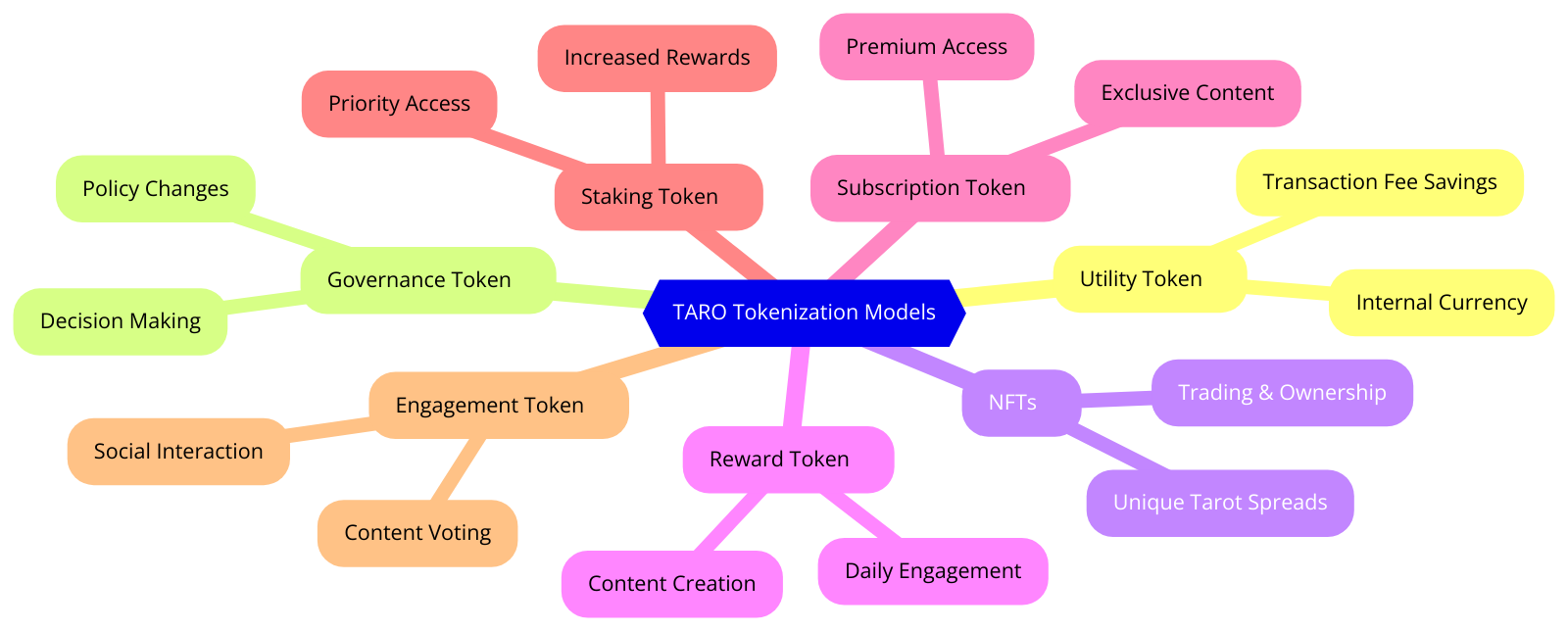
Below is a revised version of the strategy, now integrating the Taro Token—a native utility and loyalty token that underpins new positive feedback loops in Ton Arcana. The Taro Token incentivizes engagement, referrals, and recurring usage, creating self-reinforcing, positive cycles where the community, product adoption, and token value all grow together.
We will rewrite each phase to show how Taro Token integration strengthens the product and creates virtuous feedback loops. Each stage will highlight how adding the Taro Token system fosters positive reinforcement, where user actions produce tokens that then drive more engagement, ultimately leading to sustainable growth.
id: product_educated_guess
Taro Token Concept Overview
What is Taro Token?
Taro Token is a utility token native to Ton Arcana’s ecosystem. Users earn it through community participation, referrals, daily engagement (e.g., checking daily tarot pulls), and purchasing paid readings. Taro Tokens can be used to access premium spreads, discounts, AI-enhanced interpretations, or even governance-like input on new features. Over time, the token’s perceived value increases as more users join, more utility is added, and the community recognizes it as the key to enhanced spiritual guidance experiences.
Positive Feedback Loop (PFL) Example:
- User tries a free reading → Earns a small amount of Taro Tokens for first-time engagement.
- User redeems Taro Tokens for a discount on a paid reading → Has a great experience, shares referral link.
- Referral earns both parties Taro Tokens → More users join, increasing community size and token usage.
- A larger community enhances the product’s value (more feedback, better AI training, more trust) → Increases token demand and perceived value.
This cycle repeats, continuously reinforcing itself.
id: product_educated_guess
Weeks 1–4: Foundation & Market Understanding with Taro Token
Objective: Validate demand while introducing Taro Token early to incentivize interviews, initial usage, and feedback.
-
Identify Product-Avatar & Interviews:
- Previously: We interviewed Kasamba users. Now, we incentivize participants with Taro Tokens. Anyone who completes a 5-minute interview about tarot reading preferences earns Taro Tokens.
PFL: Interviewees receive Taro Tokens → They can use them to try Ton Arcana’s beta reading at a discount → They experience the product → Provide more feedback and invite friends (earning more Taro Tokens) → Increases community size and data for AI.
-
Sales Funnel with Taro Token:
- Funnel now: Impressions → Free Daily Card → Earn small Taro Token reward → Offer paid reading at a Taro Token-discounted rate → Purchase unlocks bonus Taro Tokens and referral codes.
PFL: The very act of entering the funnel grants tokens that encourage deeper engagement. Tokens earned from initial steps lead to paid conversions, which yield more tokens, driving ongoing retention and viral growth.
-
Units, Segments & CAC Adjusted for Taro:
- Units of value: Paid reading costs could be partially offset by Taro Tokens. For example, 100 TON tokens minus some Taro Tokens discount.
- Customer segments are still spiritual seekers and crypto-enthusiasts, but now both have reason to hold and earn Taro Tokens. Spiritual seekers gain discounts; crypto-enthusiasts see potential value growth in tokens.
PFL: As more users buy readings, more Taro Tokens circulate. Demand for Taro Tokens increases as they grant preferential rates and premium features. This encourages acquisition (lower CAC) because users see tangible benefits from joining early.
-
Unit Economics & Margin with Taro Token:
- Even if CAC remains stable, users who hold Taro Tokens are more likely to return. Returning users reduce need for new user acquisition.
PFL: Returning users spending Taro Tokens (earned via engagement or referrals) stabilize revenue streams. This increases LTV and can reduce relative CAC over time since loyal token holders keep coming back without extra acquisition costs.
id: product_educated_guess
Weeks 5–8: Refining Product Positioning with Taro Token
Objective: Integrate Taro Token into the one-page business model, recruitment, LTV/ROI calculations, and product line expansions.
-
One-Page Business Model with Taro Token:
- “What/Whom”: AI tarot for spiritual seekers, now powered by Taro Token incentives.
- “How”: Users earn Taro Tokens via engagement. Tokens unlock discounts, premium readings, and maybe future governance votes.
- “Need”: Lower barrier to entry through token-based loyalty.
PFL: The more the community engages, the more Taro Tokens are distributed, leading to more product usage and higher retention, improving the platform’s overall economics and making it more attractive to new users.
-
Recruiting Marketing & Sales Specialists:
- Offer Taro Tokens as part of the compensation package or performance bonuses.
PFL: Marketing specialists holding Taro Tokens become stakeholders interested in growing the community. More marketing success → More users → More token utility → Higher token value → Marketer incentivized to work harder.
-
Retention Modeling & LTV with Taro Token:
- LTV increases as Taro Tokens encourage repeat purchases and subscription upgrades.
- Users who hold more Taro Tokens get better deals and exclusive features, making them stay longer.
PFL: Higher retention from token-driven loyalty leads to a stable or improving LTV/CAC ratio. This self-reinforcing loop continually improves profitability as the token economy matures.
-
Expanding Product Line with Taro Token:
- Introduce token-gated premium content, such as advanced AI spreads only accessible by spending or staking Taro Tokens.
PFL: The desire for premium features drives demand for Taro Tokens, which are acquired by usage or referral. More usage = more tokens in circulation = more desire for premium features, and so on.
id: product_educated_guess
Weeks 9–12: Community & Competitive Edge with Taro Token
Objective: Use Taro Token to form a community identity and establish a superior proposition over competitors.
-
Community Strategy & Ideological Competitor:
- Community members earn Taro Tokens by contributing content, answering questions, or participating in weekly tarot discussions.
- Standing against legacy platforms that do not reward user participation, Ton Arcana’s community members become stakeholders in ecosystem growth.
PFL: Active community → More user-generated content → More tokens earned by contributors → More valuable community as knowledge and trust grow → Attract more users who also earn tokens → Continual strengthening of the ecosystem.
-
Growth Drivers with Taro Token:
- Paid traffic leads to initial users who get Taro Tokens for joining. Referral program grants tokens to both referee and referrer.
- UGC: Users posting their experiences earn extra Taro Tokens, motivating more content creation.
PFL: Each growth action is rewarded with Taro Tokens, turning marketing into a self-sustaining loop. More referred users → More tokens in circulation → More content → Better product → More referrals.
-
Competitor Contrast Post:
- Emphasize that traditional platforms offer no rewards, while Ton Arcana continually shares value with its users through Taro Tokens.
PFL: Highlighting tokens incentivizes existing users to share the post. More shares = more tokens earned = more new users = more token demand.
id: product_educated_guess
Weeks 13–16: Scaling & Validation with Taro Token
Objective: Launch MVP integrated with Taro Token mechanics to validate token-driven retention and feedback loops.
-
Persona & CJM:
- “Mia” now sees that first engagement earns her Taro Tokens. She returns daily to earn small token rewards and redeems them for discounts.
PFL: Mia’s journey: initial token reward → tries full reading at a discount → loves it → invites friends, earns more tokens → uses tokens for premium spreads → stays longer in the ecosystem.
-
User Stories & JTBD with Taro Token:
- “As a user, I want to earn Taro Tokens by engaging daily so I can unlock premium readings at reduced cost.”
PFL: Every user action (purchases, referrals, community participation) feeds back into token accumulation and usage, fueling ongoing engagement.
-
MVP Launch & Data Check:
- Beta testers receive Taro Tokens for feedback surveys. Positive experience leads them to redeem tokens for paid readings and invite friends, repeating the cycle.
PFL: Launch feedback increases token circulation. Higher token usage validates utility, encouraging continuous improvement and scaling.
id: product_educated_guess
Weeks 17–20: Long-Term Growth & Launch Prep with Taro Token
Objective: Prepare a major launch where Taro Tokens are integral, ensuring that as user base scales, token-driven feedback loops intensify.
-
Additional Customer Development:
- New interviews show users intrigued by token rewards. They see Taro Tokens as a gamified element that makes spiritual exploration fun and rewarding.
PFL: More positive feedback → More trust → More Taro Token holders spreading the word → Larger community → More valuable ecosystem for everyone.
-
Competitive Edge (Taro Token Integration):
- Ton Arcana stands out because it shares value back with users. The token system transforms users into stakeholders who benefit from growth.
PFL: Unlike competitors, growth directly benefits existing users via tokens. More growth = more token demand = happier users = more retention = more growth.
-
Final Marketing Push & Launch:
- Launch campaign rewards early adopters with bonus Taro Tokens. Influencers get tokens for promotions.
PFL: Influencers become invested because they hold tokens. Their success grows token value, which benefits them, the platform, and the users they bring in.
id: product_educated_guess
Success Measures & Validation with Taro Token
- Higher LTV: Users keep returning to spend tokens and gain benefits.
- Lower CAC: Taro Token referrals and community contributions reduce need for paid acquisition.
- Richer Community: Continuous incentive to produce content and share experiences.
- Stable Growth Loops: Every action (buying a reading, referring a friend, contributing content) earns tokens, which are used to enhance user experience, leading to further engagement.
Ultimate PFL:
A user joins → earns Taro Tokens → redeems for discounts → enjoys premium features → refers friends → earns more tokens → larger community and better product → increased token utility and perceived value → user satisfaction rises → user stays and repeats the cycle.
id: product_educated_guess
Conclusion
By integrating Taro Token into every aspect of the Ton Arcana strategy, we establish multiple positive feedback loops. The token acts as a unifying force that rewards participation, encourages referrals, and enriches the product’s perceived value. Each user action feeds back into a system that grows stronger, more valuable, and more engaging over time, creating a sustainable, self-reinforcing ecosystem that outpaces traditional competitor models.
id: product_educated_guess
Below is an updated version of the Ton Arcana strategy, now incorporating the 12 tokenization models from the provided document. Each model is woven into the overall product roadmap, creating multiple interconnected positive feedback loops. The Taro Token (TARO) is at the center of this ecosystem, driving user engagement, content creation, governance participation, and premium access. By combining these use cases, Ton Arcana transforms into a vibrant, self-sustaining network where every user action fuels growth, community enrichment, and token value appreciation.
id: product_educated_guess
Core Concept: Taro Token (TARO)
TARO is not just a utility token for purchases; it’s also a governance, engagement, and rewards mechanism. Users can earn TARO by contributing to the community, staking tokens, creating content, or accurately participating in predictions. TARO can then be spent on premium readings, NFT collectibles, premium subscriptions, discounts, and more. Over time, this creates a powerful positive feedback loop:
Positive Feedback Loop (PFL) Example:
- A user engages daily, earns TARO (Reward Token model).
- They spend TARO on premium spreads (Premium Access model), discovering rare NFT tarot cards (NFT model) and possibly staking tokens (Staking model) for even greater privileges.
- The enriched user experience leads them to create their own content or offer predictions (User-Generated Content & Prediction models), earning even more TARO.
- Holding TARO grants governance rights (Governance Token model) and social status (Social Token model), encouraging long-term commitment and community building.
- As the community thrives, TARO’s demand and utility grow, benefiting all participants.
This cyclical system ensures that every participant action—be it buying, creating, predicting, voting, or staking—feeds back into the ecosystem, enhancing value for everyone.
id: product_educated_guess
Weeks 1–4: Foundation with Multi-Model Tokenization
Objective: Validate the product concept and set the stage for TARO-driven engagement from the start.
-
Interviews & Early User Base (Utility + Reward Tokens):
Offer small TARO rewards to early interviewees who help refine the product. They can later spend their earned TARO on a discounted reading (Utility Token model) or save them for future premium access.PFL: Interview participation → Earn TARO → Spend on readings → Provide feedback → Earn more TARO through continued engagement.
-
Sales Funnel Integration (Discounts + Subscription Tokens):
The initial funnel (impressions → free reading → paid reading) now includes TARO-driven discounts and subscription offers. For example, users who hold a certain TARO balance get discounts on their first full spread (Discount & Bonus Token model) or can purchase a monthly premium subscription at a reduced TARO price (Subscription Token model).PFL: More conversions → More TARO spending → Subscription retention → Higher token demand → More community growth.
-
Defining Segments with Engagement & Social Tokens: Spiritual seekers and crypto enthusiasts both find value in TARO. Spiritual seekers earn Engagement Tokens (a form of TARO) by contributing stories or interpretations. Crypto-savvy users enjoy staking TARO or participating in governance votes.
PFL: Segments feed each other: Spiritual seekers create content (TARO earned), crypto users stake or vote, both groups strengthen the community and token utility.
-
Unit Economics & Utility Token Stabilization: By using TARO for core services, we ensure stable internal economics. As more users purchase readings or premium services in TARO, the token’s value stabilizes.
PFL: More utility usage → More TARO velocity → Stronger internal economy → Increased willingness to spend and earn TARO.
id: product_educated_guess
Weeks 5–8: Refining Strategy with Additional Models
Objective: Introduce governance, NFT, and content tokenization elements to add depth and value.
-
One-Page Business Model Incorporating All 12 Models:
- Utility Token: TARO for basic and advanced readings.
- Governance Token: TARO grants voting power on new features (model 2).
- NFT Tarot Spreads: Users buy unique tarot NFTs with TARO (model 3).
- Reward Token: Daily activity, referrals, content creation all yield TARO (model 4).
- Premium Access Token: Exclusive features unlocked by TARO (model 5).
- Staking: Users lock TARO for higher rewards or discounts (model 6).
- Engagement Tokens: TARO for community contributions, articles, Q&A sessions (model 7).
- Prediction Tokens: Users participate in tarot-related predictions, wager TARO, earn rewards (model 8).
- Subscription Tokens: TARO-based recurring access to premium tiers (model 9).
- Discounts & Bonuses: TARO redemption for service discounts (model 10).
- Social Tokens: TARO for social recognition, ranks, and special community roles (model 11).
- Content Tokenization: User-generated content can be minted as NFTs purchased in TARO (model 12).
PFL: Each model feeds into the others. For example, a user who stakes TARO gains status, unlocks premium NFTs, participates in predictions, and then earns even more TARO through community engagement.
-
Recruitment Using Governance & Social Tokens: Offer TARO-based incentives for marketing and sales specialists. Their success in attracting new users grows the community, raising token utility, which in turn benefits them as token holders.
PFL: Hired specialists who hold TARO have a vested interest in platform growth → More marketing success → More users → Higher token demand → Greater rewards for specialists.
-
Retention & LTV with Staking, Subscriptions, and Predictions: Users who stake TARO or maintain long-term subscriptions (subscription token model) stay engaged longer. Additionally, predictions and contests keep users returning regularly, fueling recurring token flow and reinforcing retention.
PFL: Longer retention → More staking and subscription → More TARO locked and circulated → Higher user lifetime value.
-
Expanding Product Line With NFTs and Content Tokenization: Introduce unique tarot decks as NFTs purchasable with TARO. Encourage users to create their own guidebooks and interpretations, tokenizing them as NFT content for sale. This enriches the ecosystem’s cultural dimension and gives creators a revenue stream.
PFL: Creative content → More NFTs → Higher community involvement → Greater TARO transactions → More valuable ecosystem.
id: product_educated_guess
Weeks 9–12: Community Building & Competitive Edge
Objective: Fully implement social and engagement tokens, reinforcing community bonds and differentiating from competitors.
-
Community Strategy with Social Tokens & Engagement Tokens: Users earn TARO by participating in discussions, helping newcomers, or curating valuable tarot content. High-TARO-status users get special chat rooms or exclusive events.
PFL: Social engagement → Earn TARO → Unlock exclusive community spaces → Build stronger community → Attract more users.
-
Growth Drivers Through Predictions, Discounts, and Referrals: Offering referral bonuses in TARO motivates existing users to bring friends. Prediction contests create excitement and playful competition. Discounts encourage frequent purchases.
PFL: Referrals → More users → More TARO transactions → Higher token demand → More referral incentives.
-
Competitor Contrast With Governance & NFT Models: Traditional tarot platforms lack user influence and unique digital ownership. Ton Arcana gives users voting rights (governance token model), NFT-based ownership of unique spreads, and a dynamic ecosystem where their contributions are rewarded.
PFL: User empowerment → More engagement → More token usage → Increasing token value and user satisfaction.
id: product_educated_guess
Weeks 13–16: Scaling & Validation
Objective: Launch MVP with a few selected tokenization models and expand based on user feedback.
-
Persona & CJM with Tokenization: Persona “Mia” checks in daily for free TARO rewards, uses them for discounted readings, tries premium NFT spreads, then stakes her TARO to gain extra perks. She eventually creates her own guide and sells it as NFT content to other users.
PFL: Mia’s single journey touches on multiple models, each step reinforcing the next, ensuring deep engagement and higher overall token velocity.
-
User Stories & JTBD with All Models:
- “As a creative user, I mint my tarot interpretations as NFTs and earn TARO from sales.”
- “As a regular subscriber, I lock in my TARO for monthly premium features.”
- “As a community leader, I earn TARO by moderating forums and gain governance influence.”
PFL: Diverse user personas interact with different token models, creating a multi-faceted loop of participation, reward, and reinvestment.
-
MVP Launch & Data Check: Start with a few key models (Utility, Reward, Premium Access, Engagement), measure how users earn and spend TARO, then gradually introduce more models (NFTs, Staking, Governance, Prediction) as feedback confirms their value.
PFL: Early data-driven refinement leads to stronger feedback loops. Successful models increase TARO usage, which then encourages adding more features, attracting more users, and further increasing token utility.
id: product_educated_guess
Weeks 17–20: Long-Term Growth & Launch Preparation
Objective: Finalize all tokenization models, prepare major launch, and ensure legal/regulatory compliance.
-
Additional Customer Development: Interview users about their experiences with staked TARO, governance votes, prediction games, and NFT marketplace. Refine token distribution and inflation rates to maintain sustainable tokenomics.
PFL: Better tokenomics → More trust → More engagement → Higher LTV → More comprehensive positive feedback loops.
-
Competitive Edge & Final Positioning: Ton Arcana is now a holistic, gamified spiritual ecosystem. Its unique blend of tarot, AI, blockchain, and an all-encompassing token economy sets it apart. Users become co-creators, investors, and community members, all incentivized by TARO.
PFL: At scale, more participants = richer content = more TARO demand and usage = even richer ecosystem.
-
Final Marketing & Launch: Present the full suite of tokenization models during the public launch. Highlight the ability to earn, stake, vote, create, and own content, appealing to a broad audience.
PFL: Launch success → Media coverage → More users buying TARO → Stronger token market → Continuous growth cycle.
id: product_educated_guess
Success Measures
- Increased LTV: Multiple token use cases encourage repeated engagement and spending.
- Lower CAC: Referral bonuses, community rewards, and social incentives bring in new users organically.
- High Retention: Users stay for subscriptions, predictions, governance decisions, NFT trading, and social recognition.
- Expanding Content & Features: Authors monetize their content, increasing platform diversity and user satisfaction.
Each model doesn’t just stand alone—it integrates with others to form a deeply interwoven network of positive feedback loops, ensuring that Ton Arcana’s economy, community, and product value consistently reinforce one another.